
 Italiano
 Francais
 German
 Polski
 Hungarian



Electric pizza oven: what features really matter before buying one
- 18 Feb, 2026
- Insights
- 0 Comments
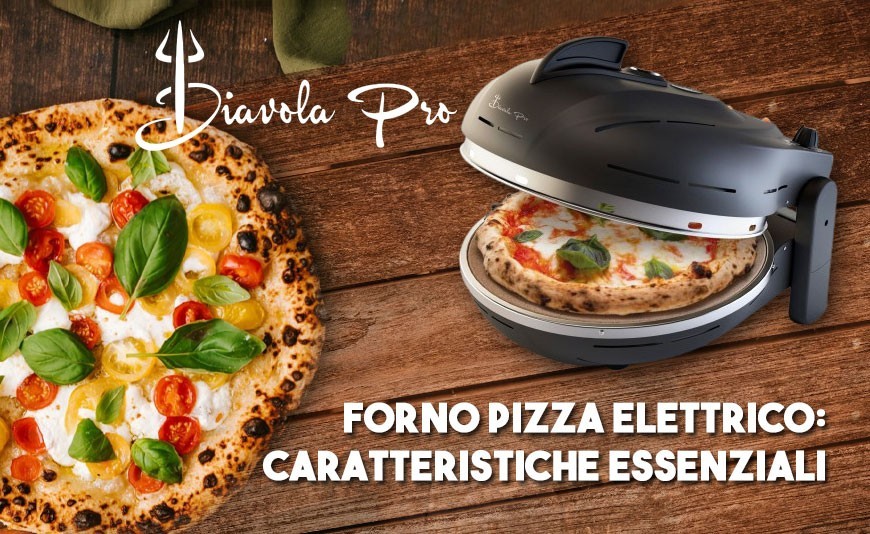
Electric pizza oven: which features really matter before buying one
Choosing a electric pizza oven may seem simple, but anyone who wants to achieve truly well-baked pizza quickly discovers that the differences between models are enormous. Some ovens promise high performance but don’t reach adequate temperatures, while others have good materials but poor heat management. Understanding which technical characteristics really affect the final result is essential to avoid wrong purchases and obtain quality pizza from the very first bakes.
This guide objectively analyzes the factors that determine the real performance of an electric pizza oven, comparing the main technologies and explaining which ones truly matter for home and semi-advanced use.
Maximum temperature: the most decisive factor
Temperature is the single most important parameter.
A traditional Neapolitan pizza bakes between 430°C and 480°C. Many domestic electric ovens, however, stop between 300°C and 350°C: this means longer baking times and different results, such as:
- drier dough
- less developed crust edge
- harder base
Practical comparison
- 250–300°C: home-oven style pizza
- 300–400°C: good artisanal pizza
- 400–500°C: pizzeria-style pizza
Technical conclusion: if the goal is to replicate pizzeria pizza, high temperature is not an optional but a requirement.
Thermal stability: what separates a good oven from a mediocre one
Reaching high temperatures is not enough: the oven must maintain them when the pizza is inserted.
When the door is opened:
- a poorly insulated oven loses heat quickly
- a well-designed one recovers temperature within seconds
This parameter depends on:
- internal insulation
- heating element power
- cooking chamber design
- thermal mass of the baking surface
An oven with poor stability forces you to wait between pizzas, making home use frustrating.
Real power vs declared power
Many users evaluate only the wattage listed on the technical sheet. In reality, nominal power alone is not enough to understand performance.
More important factors are:
- heat distribution
- heating element quality
- electronic management
- thermal dispersion
Two ovens with the same power can deliver completely different results if one disperses heat and the other retains it.
Baking surface: “biscotto” or alternative materials?
The baking surface on which the pizza cooks directly affects texture and crispness.
Biscotto stone
Advantages:
- absorbs moisture
- distributes heat evenly
- simulates wood-fired oven floors
Disadvantages:
- requires preheating
- can crack if subjected to thermal shock
Steel
Advantages:
- fast heating
- high durability
Disadvantages:
- more aggressive bottom cooking
- less moisture absorption
Technical summary: those seeking soft, well-aerated pizza tend to prefer surfaces that simulate stone behavior, therefore they will use a high-performance biscotto stone.
Heat distribution: top, bottom, or combined?
An electric pizza oven can heat in three ways:
- dominant lower element
- dominant upper element
- balanced system
A balanced system allows you to:
- cook base and crust edge simultaneously
- avoid constant rotation
- achieve even browning
In less advanced models the pizza must be rotated frequently to compensate for hotter zones.
Preheating time
A parameter often underestimated but very important for home use.
- 10–15 min: practical for daily use
- 20–30 min: acceptable
- over 30 min: impractical
Preheating depends on:
- insulation
- real power
- internal thermal mass
Dimensions and internal volume
A compact oven is not necessarily less powerful. What matters is the ratio between:
- chamber volume
- power
- insulation
A chamber that is too large disperses heat. One that is too small limits pizza size and maneuverability.
For home use, the ideal volume is one that allows:
- a standard 28–32 cm pizza
- space for peel insertion and rotation
Energy efficiency and consumption
An efficient oven is not the one that consumes the fewest watts in absolute terms, but the one that:
- cooks faster
- maintains temperature
- reduces heat loss
A well-insulated model can consume less than a low-power but inefficient one, because it operates for less time.
Ease of use: the often decisive factor
An oven that is technically powerful but complicated to use ends up being used less.
Features that improve the experience:
- intuitive controls
- temperature indicator
- easy chamber access
For home use these variables affect final satisfaction more than one might think.
Build quality and materials
A pizza oven is subjected to continuous thermal stress. Lower-quality materials can lead to:
- deformation
- heat loss
- performance decline over time
Indicators of good construction:
- robust structure
- well-sealed door
- thick internal components
- multi-layer insulation
When an electric oven is really the right choice
It’s the ideal solution if:
- you cook in an apartment
- you cannot use wood or gas
- you want practicality
- you want consistent results
It’s less suitable if:
- you want a traditional live-flame experience
- you need to bake many pizzas continuously
- you require high production capacity
How to truly evaluate an oven before buying
Practical checklist:
- real maximum temperature
- thermal stability
- type of baking surface
- heat distribution
- insulation
- preheating time
- chamber dimensions
- control simplicity
If a model excels in all these parameters, it likely belongs among high-end options even without knowing the brand.
Common mistakes to avoid
Many buyers choose the first available oven based on criteria that are not very relevant:
- external design
- low price
- declared watts
- superficial reviews
These elements do not necessarily indicate real performance. Internal technical parameters matter much more.
What are the conclusions
A good electric pizza oven is not recognized by a single specification but by the balance between several factors: temperature, stability, materials, heat distribution, and overall design. Understanding these elements allows you to quickly distinguish a truly high-performing product from one that is only apparently good.
Those who evaluate a purchase using technical criteria rather than purely aesthetic ones are far more likely to achieve professional-level results even in a home kitchen.
A concrete example of an oven that integrates these features
An electric pizza oven that brings together many of the technical characteristics analyzed is the Diavola Pro V3 model. Its design clearly focuses on the combination of high temperature, thermal stability, and optimized cooking chamber, three elements that directly affect the final pizza result. The compact but well-insulated structure allows it to quickly reach temperatures typical of professional ovens while maintaining them even during loading, while the high-thermal-inertia baking surface promotes a dry, uniform base. In practical terms, this type of configuration represents an example of how a modern home oven can approach professional equipment performance without requiring dedicated space or installations.
FAQ — Frequently asked questions
What is the minimum temperature to bake a pizza well?
For a good pizza you need at least 350°C, while for pizzeria-style results temperatures above 400°C are required.
Does an electric pizza oven cook better than a home oven?
Yes, because it reaches much higher temperatures and concentrates heat more effectively.
Better compact or large oven?
It depends on usage. For home, a well-insulated compact oven is often more efficient.
Is a pizza stone really necessary?
It’s not mandatory, but it helps achieve a dry base and even cooking.






0 Comments